
Sonic Futures
Considering the Future of Built Environments and Hybrid Sonic Ecologies

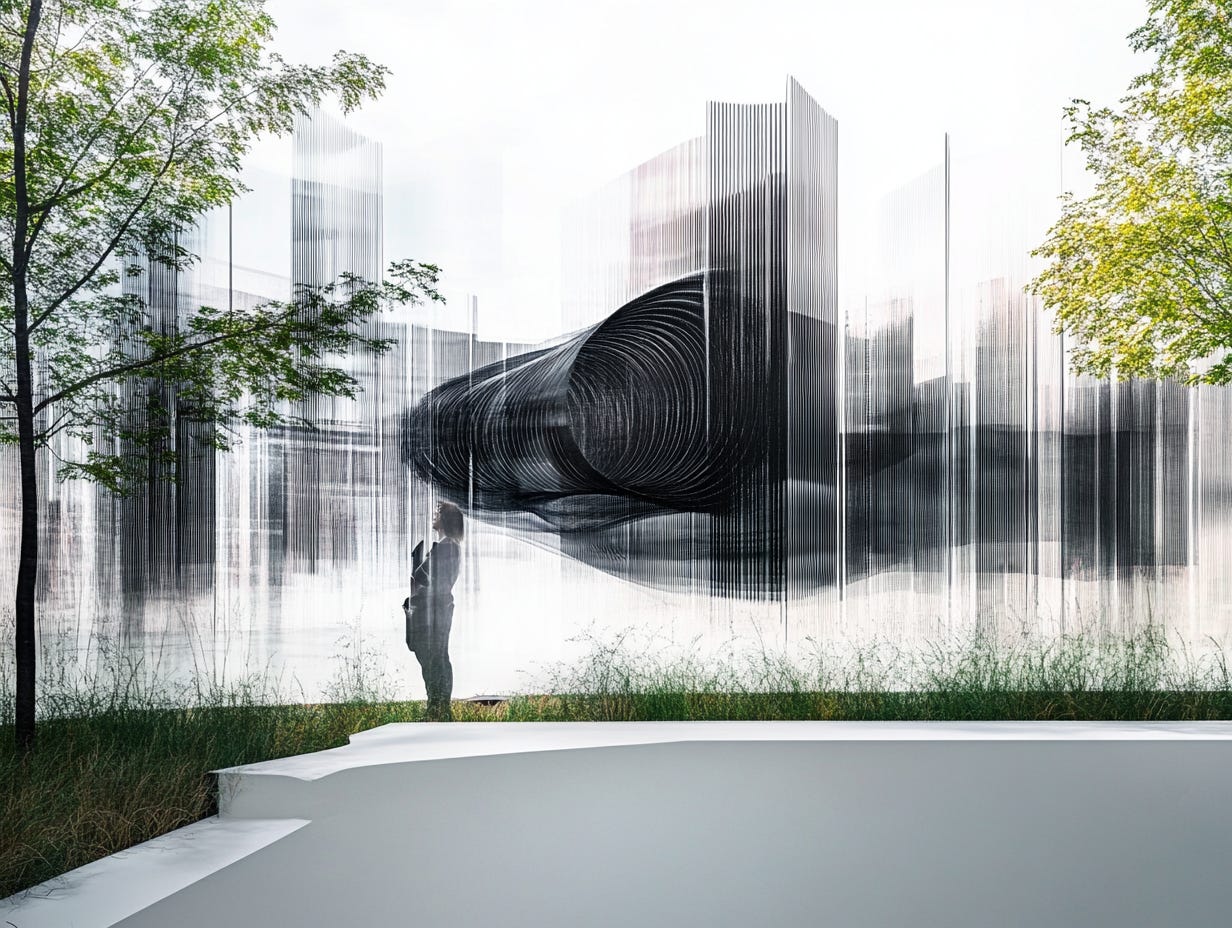
What stories are hidden in the symphony of sounds that surround us each day? How do these unseen frequencies shape our experiences, influence our emotions, and connect—or disconnect—us from the spaces we inhabit?
"Can we design soundscapes that harmonize synthetic and biological rhythms, weaving alternative textures, tones, and rhythms into the architectures of our future?"
In the Anthropocene, the soundscapes that once anchored human evolution are fading. The rhythmic crash of waves, the intricate calls of birds in a forest, and the rustle of wind through leaves—these were not mere background noise. They formed a rich acoustic environment that sharpened our senses, tuned our cognitive patterns, and embedded us in an ecological “harmony”1. What happens when these sounds are replaced by the unrelenting hum of machines, the growl of engines, and the synthetic pings of digital devices?
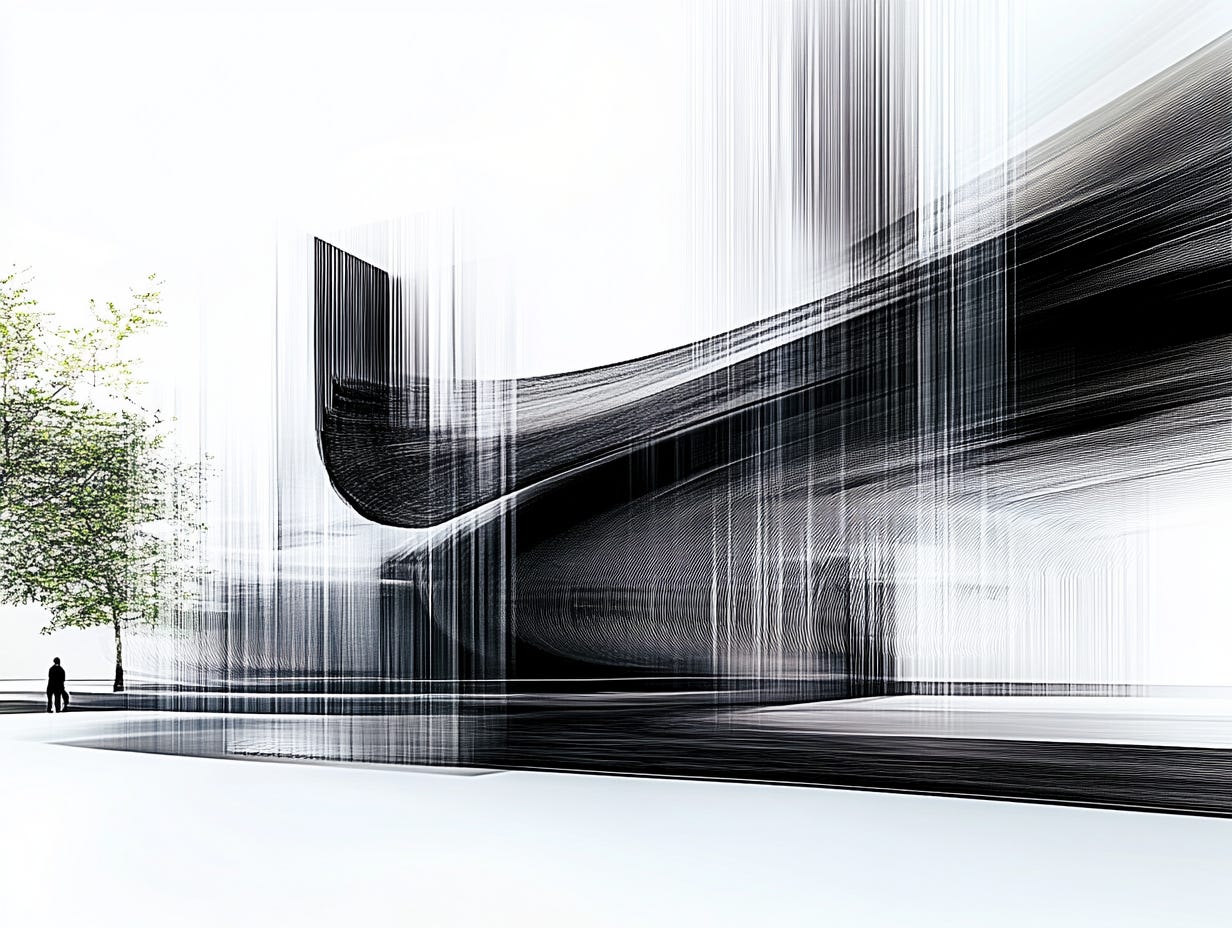
Perhaps the transformation began with the Industrial Revolution, when the clatter of machinery redefined the urban environment2. Now, the digital age introduces synthetic stimuli engineered to capture attention. Could these artificial frequencies subtly disrupt the biological rhythms that evolved in sync with natural soundscapes? Without the grounding tones of nature, are we losing an essential tether to the world and ourselves?
In modern urban environments, where artificial soundscapes dominate, what are the implications for our mental and physical health? Noise pollution from traffic, machinery, and constant digital notifications surrounds us, creating a ceaseless backdrop of sound. Chronic exposure to such noise has been linked to increased stress, diminished cognitive focus, and long-term health issues3. Does it alienate us further from our surroundings, or are our brains adapting to this new sonic reality at a cost we don’t yet fully understand?
To explore this, what can we learn by analyzing the acoustic patterns of the built environment? What do the frequencies of these spaces reveal, and how might they help us uncover the oscillations and sonic emissions shaping our daily lives? Could computational tools allow us to “listen” more deeply to the built world, uncovering hidden dynamics that influence our experiences?
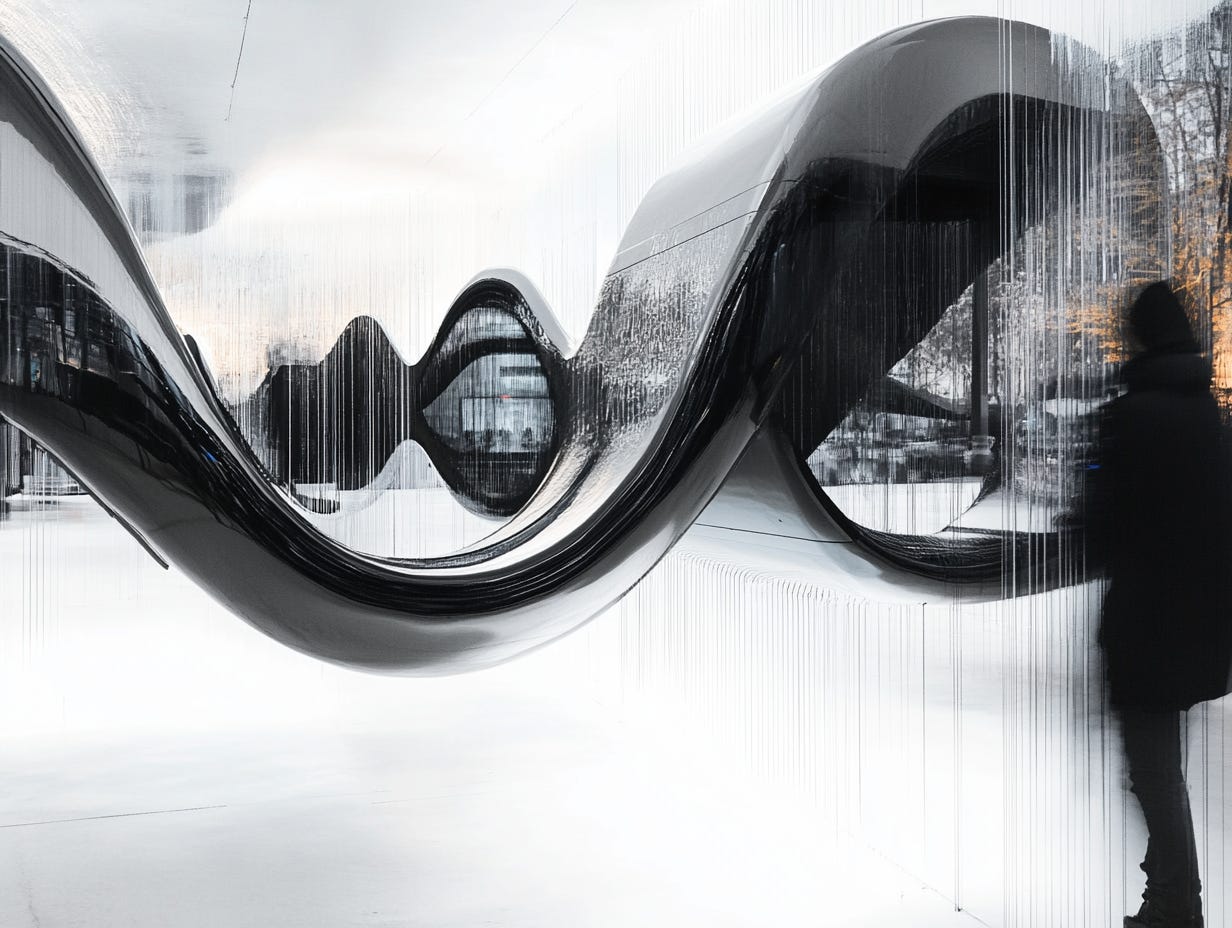
If artificial soundscapes contribute to alienation, can their design be reimagined to foster connection—mental health? Could intelligent algorithms manage soundscapes to create enriched auditory experiences—modulating sound to enhance comfort, privacy, productivity, relaxation, and integration of essential natural elements? Can sonic materials be integrated into the built environment to enliven spaces in new ways, weaving alternative textures, tones, and rhythms into their architectures4?
In this context, my research considers: Can robotic sound instruments and sonic objects be integrated into the built environment to create dynamic, evolving soundscapes? By embedding these systems into urban spaces, might we improve acoustic aesthetics, enhance health, promote mindfulness, and foster ecological awareness?
One essential step involves analyzing the frequencies of both natural and artificial soundscapes. What can we learn about their rhythms, amplitudes, and emotional effects? How might this understanding guide the design of dynamic sonic materials that resonate with our evolutionary biology while addressing the challenges of modern life?
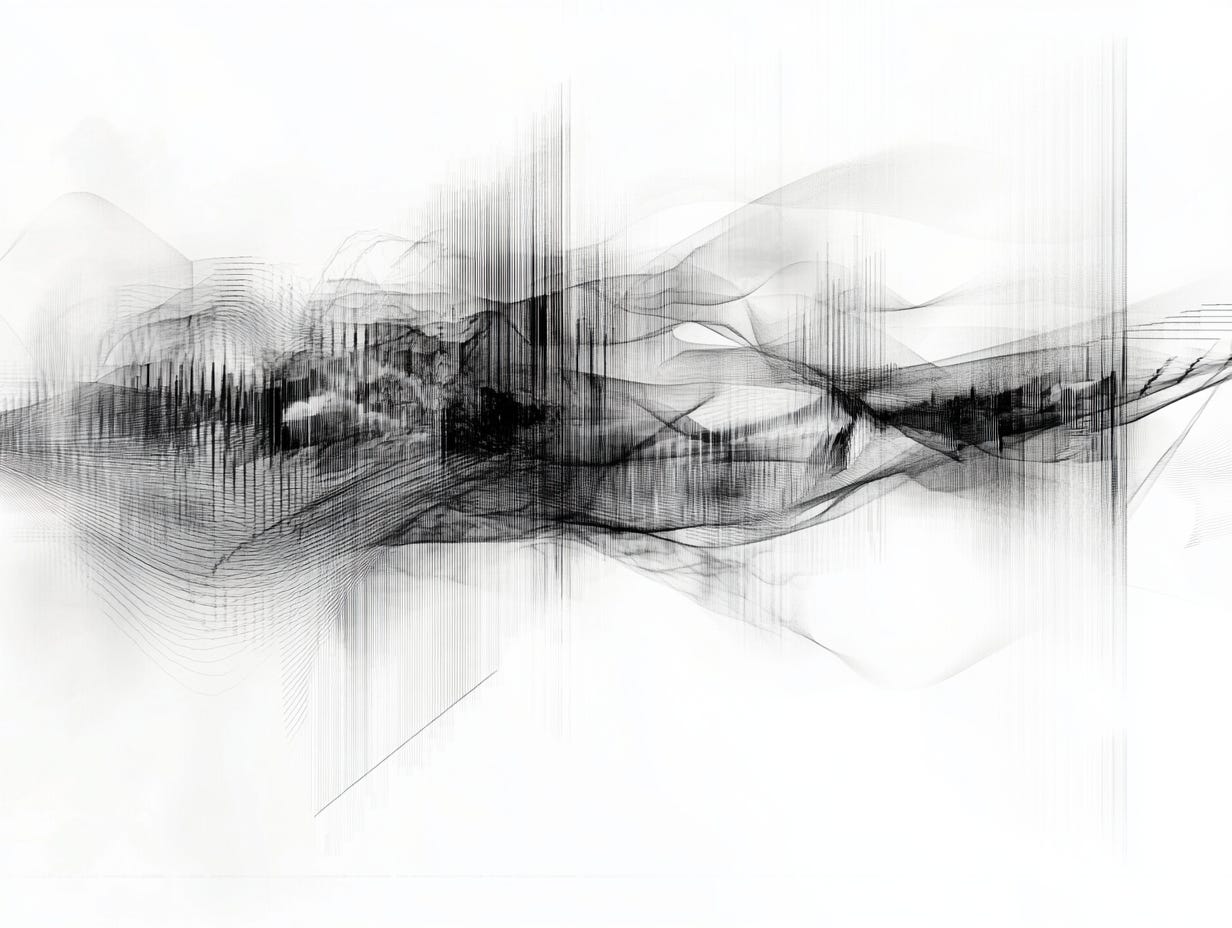
Ultimately, is this work about more than sound? Perhaps it is about evolution of nature and design. But can we move beyond the idea of returning to a past where humans were more deeply embedded in nature and instead embrace a hybrid future where nature is technological? In this world, might artificial systems, AI, and synthetic lifeforms intermingle with biological processes to form a new kind of ecology? Time will tell.
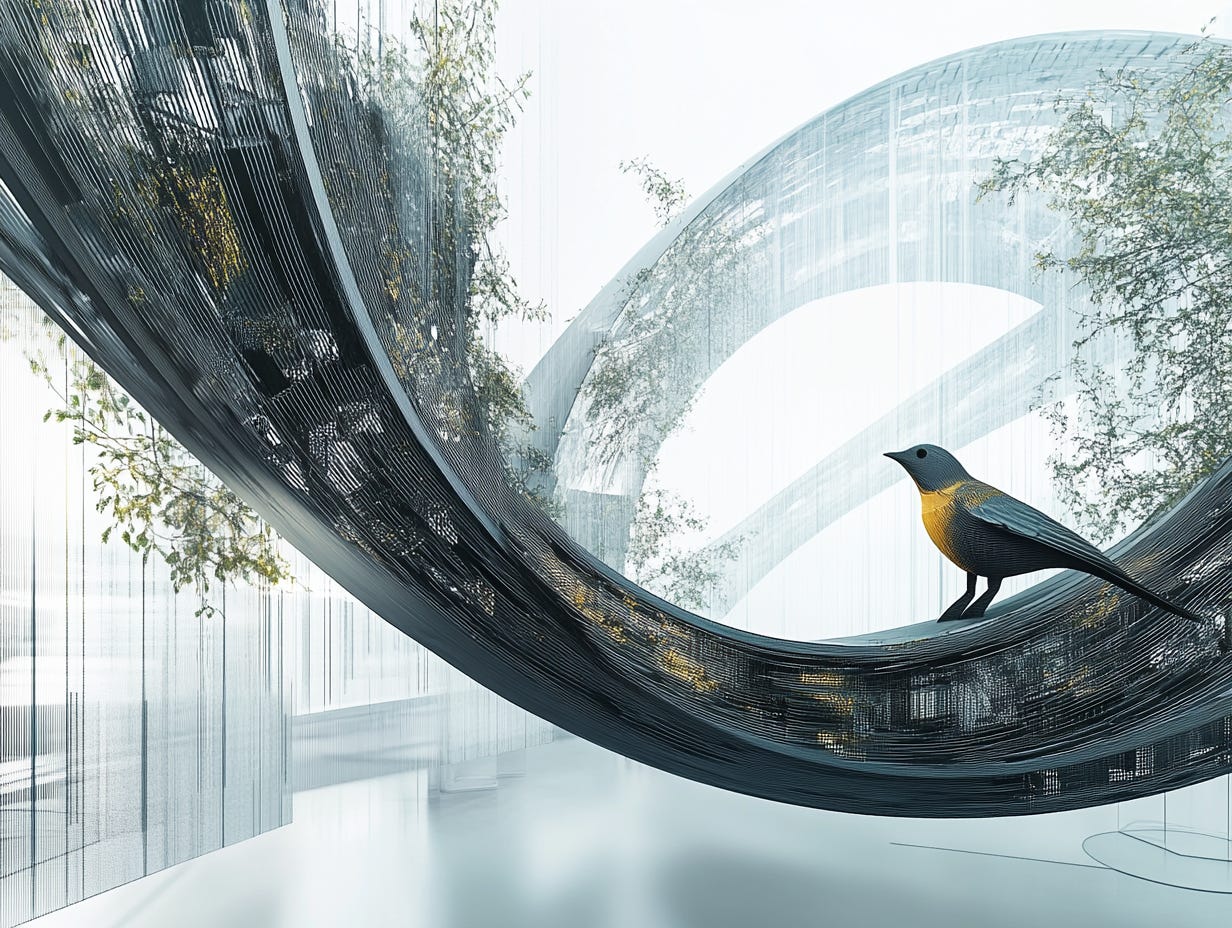
Perhaps technological nature is now essential for sustaining life on a changing planet. Given our intensive aleratio of natural systems, we have created cascading consequences that demand further intervention to mitigate their impacts—yet it seems foolish to exclude more-than-human solutions alongside our technological ones. In this emerging paradigm, can we create environments that blend synthetic and biological rhythms in harmony? Further, how will soundscapes and sonic agents play a role in guiding us through a transformation? Can the integration of dynamic sonic materials in built environments foster living links to the Earth, even within highly engineered spaces5?
As the next stages of technology take root, my research considers how AI and future synthetic agents can become integral to the materials of the built environment and its broader ecological frameworks—not merely coexisting with nature but actively contributing to its evolution. Finally, by learning from and collaborating with natural systems, can we design technological environments attuned to the rhythms of life—evolving with, rather than against, the forces that sustain our planet?
Schafer, R. M. 1994. The Soundscape: Our Sonic Environment and the Tuning of the World. Destiny Books.
Bijsterveld, K. 2008. Mechanical Sound: Technology, Culture, and Public Problems of Noise in the Twentieth Century. MIT Press.
Basner, M., Babisch, W., Davis, A., Brink, M., Clark, C., Janssen, S., and Stansfeld, S. 2014. Auditory and non-auditory effects of noise on health. The Lancet. 383, 9925 (Apr. 2014), 1325–1332.
Truax, B. 2001. Acoustic Communication. Ablex Publishing.
Blesser, B., and Salter, L.-R. 2007. Spaces Speak, Are You Listening?: Experiencing Aural Architecture. MIT Press.
Very thought provoking questions, Mikhail! I look forward to reading your thought process as your research evolves further.